
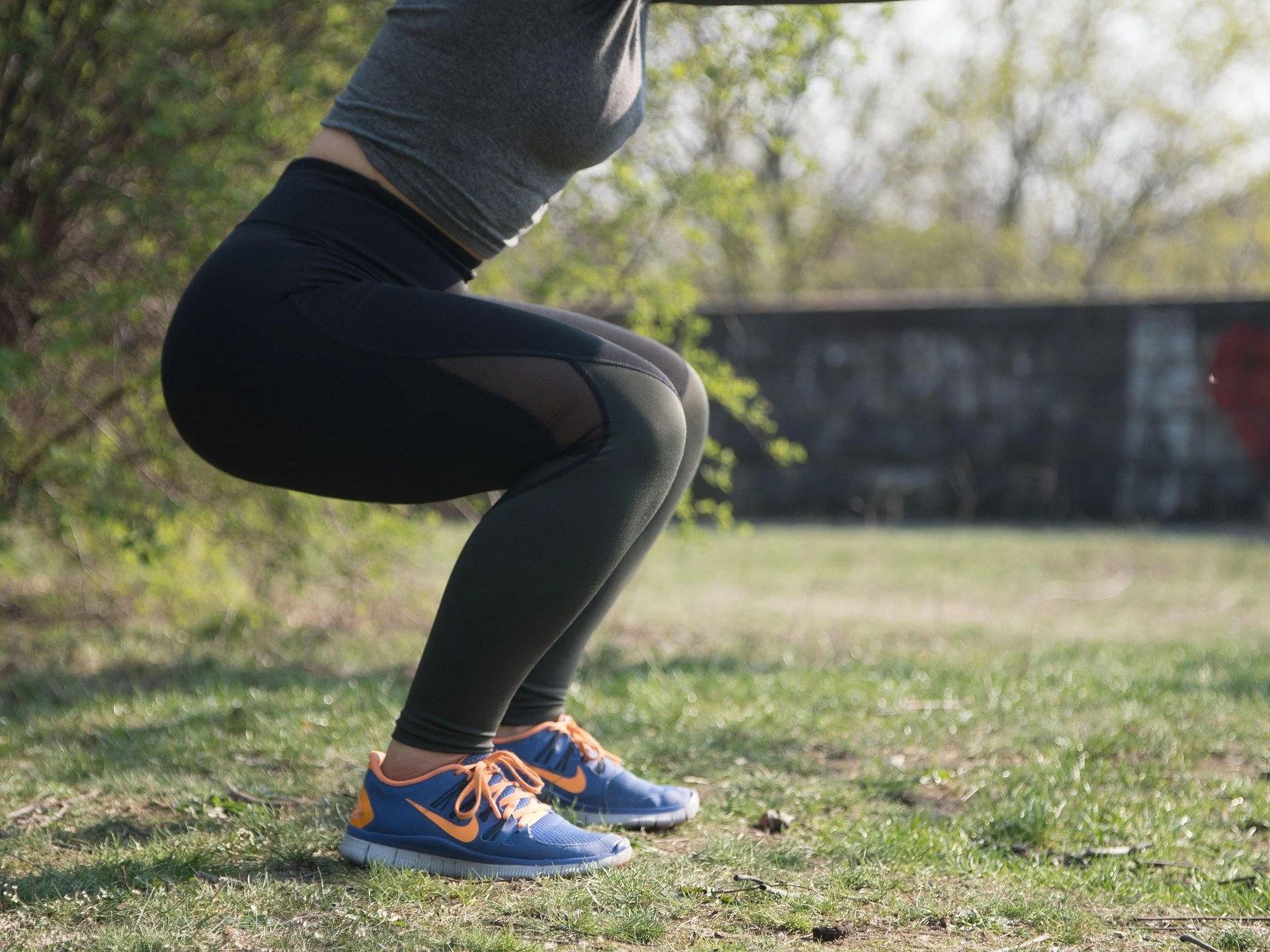
Are you a chronic butt clencher? Or maybe whenever you do squats you can only feel them in your quad muscles? Both of these things can be indicative that not only your glutes, but your pelvic floor, could benefit from some attention.
Our glutes and our pelvic floor muscles are connected in multiple ways including through fascia (connective tissue), muscular demands on both muscle groups, and neurological connections through similar nerve pathways. The pelvic floor is well known for its role in peeing, pooping, delivering babies, and intimacy. However, it also plays a shared role with glutes in stabilizing hips and spine through movement, managing pressure changes in the abdomen during activities such as sneezing and running, and load transfer from our feet. When our glutes engage during functional movements such as standing up, walking, and squats our pelvic floor muscles co-contract without most people realizing it’s happening. That’s why pelvic floor therapists will also typically assess glutes depending on someone’s symptoms and presentations!
If glutes are under-active, they do not share their load and pelvic floor muscles may need to overcompensate to provide stability during functional movements. This can be referred to as “gluteal amnesia.” This term can be misleading as glutes do not actually “fall asleep” or “forget” how to engage, rather they are simply under-active. Gluteal amnesia can occur due to changes in neuromuscular functioning, weakness, or disuse (aka sitting for long periods of time repetitively over time). Gluteal amnesia can result in pelvic floor muscle dysfunction, hamstring pain, or low back pain as these other muscle groups have to do more work to keep us moving. On the other end of the spectrum, some people have overactive glutes. Constant glute clenching can increase tension in the pelvic floor as the pelvic floor is also being forced to contract. Too much tension in the pelvic floor can result in symptoms such as leakage, pain, difficulty completely emptying, etc.
So how do we get glutes to activate? If you are someone who has a hard time feeling glutes engage during squats, I want to first reassure you that they are likely activating. Squats are a complex compound movement that requires glutes, quadriceps, core, and hamstrings to engage and what you feel during them may change depending on form, fatigue, and strength of the various muscle groups. However, if you are really wanting to feel glutes try some of these tips below:
Slight forward lean in torso while maintaining a neutral spine
Widen your stance and turn your toes out
Think about pushing your knees out (you can even put a theraband around your legs above your knees to help)
Go deeper into your squat
If you are someone with longer thighs, you may benefit from a front squat instead of a back squat
Some other exercises to try to strengthen glutes are also listed below:
Romanian deadlifts
Step ups (think of an escalator movement, not an elevator with your upper body)
If you have questions about your glutes, reach out to us below!